
World Intellectual Property Day, 26 April 2026, focuses on how creativity and innovation, supported by intellectual property (IP) rights, help sport and fitness grow and reach people everywhere.
Les Mills International is one example of how protecting ideas early helped a small New Zealand fitness business grow into a global brand.
In addition to creating a suite of iconic group fitness programs, Les Mills developed its own fitness equipment to fix problems it saw in existing products. The equipment was designed in Aotearoa New Zealand by product engineers, physiotherapists and leaders in group fitness. The goal was to help people move better, with good technique and alignment, while making sure the equipment could handle regular use in busy gyms.
“Each product is designed with movement in mind,” says Ben Sullivan, Legal Counsel and IP Legal Lead at Les Mills International. “It’s engineered to perform and manufactured to withstand the stresses of repeated use in a gym environment.”

Today, more than 700,000 people around the world use Les Mills equipment. Ben says early IP protection helped support the business as it expanded. “Without early IP protection, we wouldn’t have laid as strong a foundation as we have for that performance today,” he says.
Recognition and trust
Trade marks have played a key role in helping customers recognise and trust the Les Mills brand as it grew. They are often one of the first things people notice when choosing a product and become more valuable as recognition builds over time.
“Trade marks are often the first thing a consumer sees when choosing a product,” Ben explains. “They grow in value through recognition and recall, and unlike patents and designs, they have an unlimited lifespan.”
Les Mills had long used trade marks for its fitness programmes. As its equipment range grew, the business applied the same thinking. Products in the SMART TECH range – including SMARTBAR®, SMARTBAND® and SMARTSTEP® – became easy to recognise, not just by name, but by their distinctive shape and colours. Les Mills protected this by registering the three-dimensional shape of the equipment as trade marks.
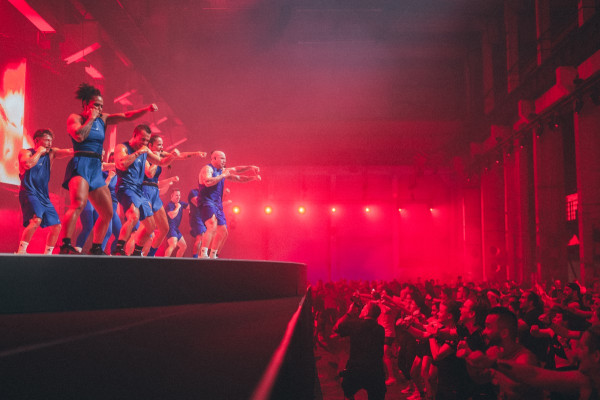
“The range became so iconic in appearance that the names were no longer the only markers telling customers this was a Les Mills product,” says Ben. “Registering the shape secured long-lasting protection for the equipment.”
Key for growth
As Les Mills expanded into other countries, having an IP strategy in place made growth easier and more certain. Registering patents, designs and trade marks helped clearly show that Les Mills owned its ideas. “IP registration establishes ‘who did that first?’,” Ben says. “By protecting ideas early, you allow that question to evolve into ‘who did that best?’”
The global fitness industry is competitive, and strong trade marks help protect against copying and fake products. They also signal trust and credibility to customers. From launching BODYPUMP in the 1990s, Les Mills has grown to offer more than 30 fitness programmes and now holds almost 1,600 trade marks worldwide.
Ben says IP has helped the business grow, not just by reducing risk, but by making it easier to expand. “From the moment someone thinks, ‘I have an idea’, they should be thinking about IP,” he says. “IP helps ensure names, products, content, and systems can be protected, licensed, or scaled without friction.”
He adds that IP can help businesses stand out and build trust. “IP deployment creates differentiation, clarity, and credibility in the market, making the business easier to recognise, trust, and buy from,” Ben says.
“IP leverage enables growth, whether through partnerships, franchising, digital expansion, or investment, all of which depend on clearly owned and controlled rights.”
While the cost of IP protection can feel overwhelming, especially for smaller businesses, Ben says many steps are manageable. “The cost associated with initial IP investment can be scary, especially for small businesses, but there’s a lot they can do themselves,” he says.
“The IPONZ website is very user friendly with simple, self-service options. That said, for more complex IP conversations, it can be worth chatting to a specialist IP lawyer.”

Looking back, Ben says IP has supported Les Mills as it continues to innovate in a fast growing global fitness industry. While IP is important to their business model, purpose remains central to what they do.
“Our IP is important to us,” Ben says, “but what really drives us is the belief that what we do can help people live healthier, happier lives – supporting our mission to create a fitter planet.”